Time of Physics, Time of Art

Publication information:

2013. “Time of Physics, Time of Art”

Abstract

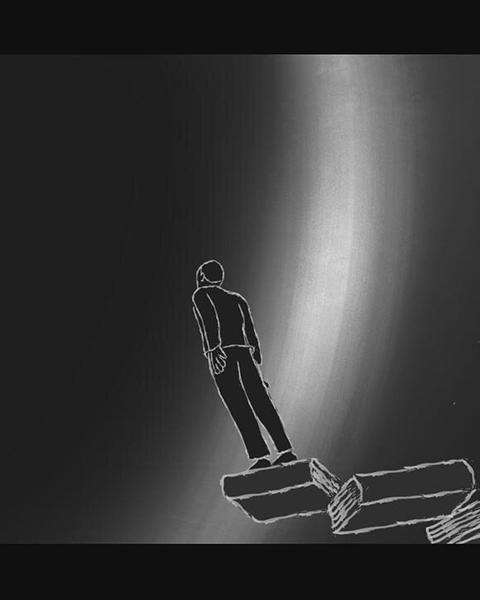
In the standard picture of the history of special relativity, Henri Poincaré’s and Albert Einstein’s reformulation of simultaneity is considered a quasi-philosophical intervention, a move made possible by their disconnection from the standard physics of the day. Meanwhile, Einstein’s engagement at the Patent Office (or Poincare’s in the Bureau of Longitude) enters the story as a lowly day job — irrelevant to fundamental work on the nature of the world. I have argued, on the contrary, that the all-too material and the most abstract notions of time cross in essential ways. In a collaboration with the artist William Kentridge (“The Refusal of Time”) we explored this intersection, pushing on history, physics, and philosophy into a more associative-imaginative register. This talk is an account of this complex of problems at the boundary of art and physics history.


Full text

In the standard picture of the history of special relativity, Henri Poincaré’s and Albert Einstein’s reformulation of simultaneity is considered a quasi-philosophical intervention, a move made possible by their disconnection from the standard physics of the day. Meanwhile, Einstein’s engagement at the Patent Office (or Poincare’s in the Bureau of Longitude) enters the story as a lowly day job — irrelevant to fundamental work on the nature of the world. I have argued, on the contrary, that the all-too material and the most abstract notions of time cross in essential ways. In a collaboration with the artist William Kentridge (“The Refusal of Time”) we explored this intersection, pushing on history, physics, and philosophy into a more associative-imaginative register. This talk is an account of this complex of problems at the boundary of art and physics history.