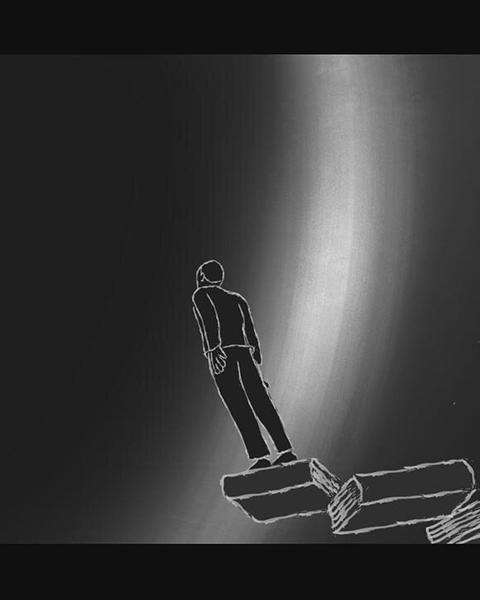
Pariscience International Science Film Festival
Official Selection, 2021


Black holes stand at the limit of what we can know. The Event Horizon Telescope links observatories across the world to simulate an earth-sized telescope. With this tool the team pursues the first-ever picture of a black hole, resulting in an image seen by billions of people in April 2019. Meanwhile, Hawking and his team attack the black hole paradox at the heart of theoretical physics—Do predictive laws still function, even in these massive distortions of space and time? Weaving them together is a third strand, philosophical and exploratory using expressive animation. “Edge” is about practicing science at the highest level, a film where observation, theory, and philosophy combine to grasp these most mysterious objects.


A philosophical and exploratory story that uses expressive animation. “Edge” is about practicing science at the highest level, a film where observation, theory, and philosophy combine to grasp these most mysterious objects.

Contact Lukas Gianocostas to host a screening of Black Holes | The Edge of All We Know


It is interesting when observations don't conform to our standard picture of how things behave. That's when people start to look for more exotic explanations. And that's what happened with the black hole story.


This is why we're chasing this problem, because if information is lost, then that contradicts almost everything we know about physics. Something's gone wrong understanding how black holes work.


It's been a perennial question in the philosophy of science: if what we're primarily interested in are phenomena as they can be detected experimentally, how, in fact, do we come to have knowledge about unobservable entities?

Director/Producer
Editor/Co-Producer
In Association with Sandbox Films
Executive Producers
Music By
Cinematographers
Stephen McCarthy, Allie Humenuk, Tim Cragg
Animators
Ruth Lingford, Momentist, Inc., Warning Office, Glynnis Fawkes
With Support from the John Templeton Foundation, Sandbox Films, Sundance Institute Documentary Film Program, with support from Science Sandbox, the Office of the Vice Provost for Research, Harvard University, and the Gordon and Betty Moore Foundation

Around the horizon of a black hole, an edge of the universe, light is captured, spun into orbit by the black hole’s powerful gravitational pull. Lying within the orange donut in the famous first image of a black hole, this “photon ring” would be a prize...
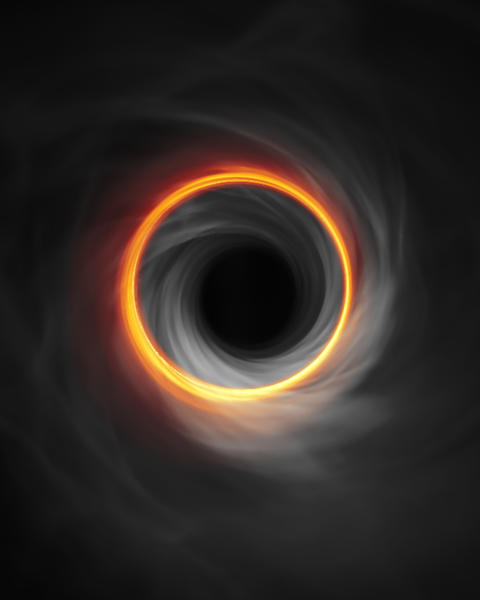
My world was jolted by two shadow images: one, thrilling, the other terrifying. After a years-long effort—with 200 other scientists—we made the first image of a black hole, its shadow of no return. Then I fell into debilitating pain. A deadly shadow...
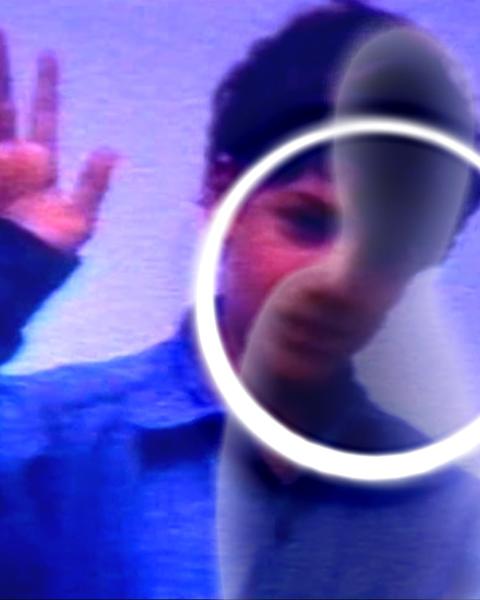
1930, Madras, India. On a steamship to England, 19-year-old Indian physics prodigy, Subrahmanyan Chandrasekhar makes a paradigm-shattering discovery about the life cycle of stars: a discipline pioneered by Sir Arthur Eddington, the world’s most famous...