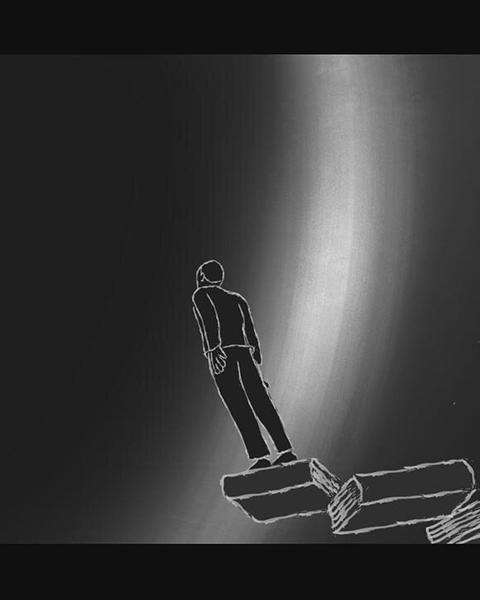
Planeta.Doc International Film Festival
Winner, 2015


Left over from the Cold War are a hundred million gallons of radioactive sludge, covering vast radioactive lands. Governments around the world, desperate to protect future generations, have begun imagining society 10,000 years from now in order to create monuments that will speak across the time.

Containment weaves between an uneasy present and an imaginative, troubled far future, exploring the idea that over millennia, nothing stays put

Contact Lukas Gianocostas to host a screening of Containment


This place is a message... and part of a system of messages... pay attention to it!
Sending this message was important to us. We considered ourselves to be a powerful culture.
This place is not a place of honor... no highly esteemed deed is commemorated here... nothing valued is here.
What is here was dangerous and repulsive to us. This message is a warning about danger.
The danger is in a particular location... it increases towards a center... the center of danger is here... of a particular size and shape, and below us.
The danger is still present, in your time, as it was in ours.
The danger is to the body, and it can kill.
The form of the danger is an emanation of energy.
The danger is unleashed only if you substantially disturb this place physically. This place is best shunned and left uninhabited.


10,000 Years
The span of human civilization
"We think of truly ancient things like the Cheops Pyramid, but that is really only a few thousand years old, and that’s still there only because it’s so large and hard to carry away. No nation state has survived more than about a thousand years. The United States is only a bit more than two centuries old. I know it seems as though it should last forever, but it won’t. Even languages don’t have a long lifespan. It’s about a thousand years."
- Greg Benford, Sci-fi writer and physicist, co-author of WIPP scenarios
24,100 Years
Half-life of plutonium
"A lot of the questions around nuclear tend to be questions about the future. The half-life of plutonium is 24,100 years. We consider something gone after 10 half-lives, so 240,000 years."
- Allison Macfarlane, Chair, U.S. Nuclear Regulatory Commission, 2012-2014
100,000,000 Gallons
Amount of radioactive sludge left over from the Cold War
Left over from the Cold War are a hundred million gallons of highly radioactive sludge, thousands of acres of radioactive land, tens of thousands of unused hot buildings, all above slowly spreading deltas of contaminated ground water. Stocked around 400 reactors (worldwide) are spent fuel assemblies, growing at a rate of 12,000 tons per year—each one radioactive enough (if unprotected) to kill a carload of people driving by it at full tilt.


The markers were not just on the surface, but should be visible however you saw the site, from above, from aircraft or satellites, or from below, whether an underground tunnel or autonomous machines drilling deep beneath the Earth. What if robots get a virus and they no longer obey their rules? What if people looted the area just the way the pyramids have been ransacked? We were trying to do scenarios that ended with intrusion so that intrusion in fact could be avoided.


Producer/Directors
Peter Galison & Robb Moss
Editor/Co-Producer
Chyld King
Cinematographers
Hervé Cohen, Tim Cragg,
Austin DeBesche, Leonard Retel Helmrich, Stephen McCarthy
Animators
Peter Kuper, David Lobser
Composers
Mike Einziger, Danny Bensi & Saunder Jurriaans, Tristeza
With Support From National Science Foundation,
National Endowment for the Humanities, Sundance Institute
Documentary Film Program, LEF Foundation, Film Study Center

Around the horizon of a black hole, an edge of the universe, light is captured, spun into orbit by the black hole’s powerful gravitational pull. Lying within the orange donut in the famous first image of a black hole, this “photon ring” would be a prize...
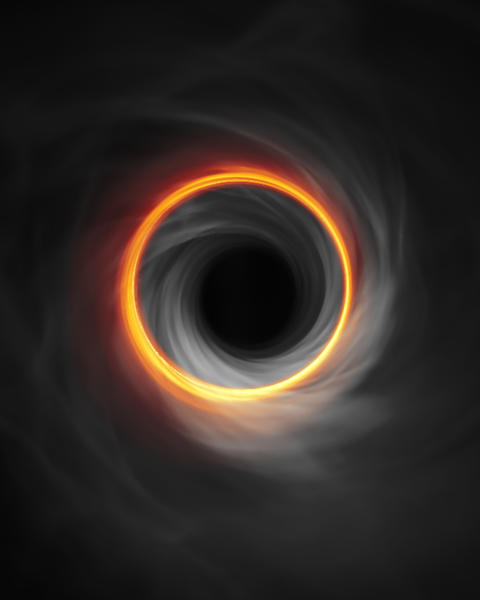
My world was jolted by two shadow images: one, thrilling, the other terrifying. After a years-long effort—with 200 other scientists—we made the first image of a black hole, its shadow of no return. Then I fell into debilitating pain. A deadly shadow...
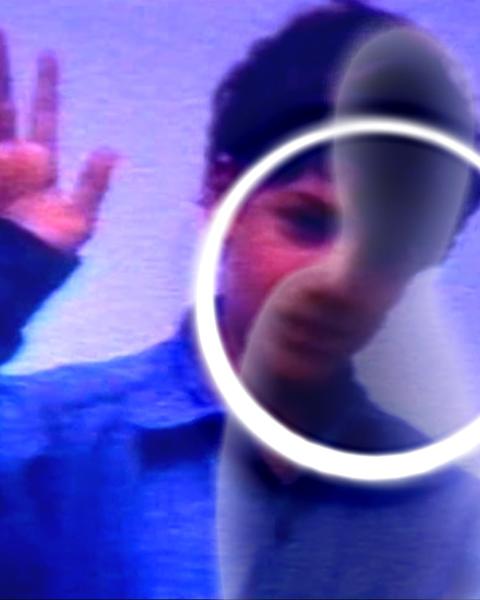
1930, Madras, India. On a steamship to England, 19-year-old Indian physics prodigy, Subrahmanyan Chandrasekhar makes a paradigm-shattering discovery about the life cycle of stars: a discipline pioneered by Sir Arthur Eddington, the world’s most famous...